
Modern globalized societies are characterized by communication that occurs at a real-time across continents. It is possible with the help of networks whether it is a message, the video, or the online meeting. The development of networks, including primitive wired networks, to sophisticated wireless networks has changed the way people live, work, and communicate. The history of networks is an innovation trail of linking machines and human beings by linking them in manners previously believed impossible.
History of Wired Networks
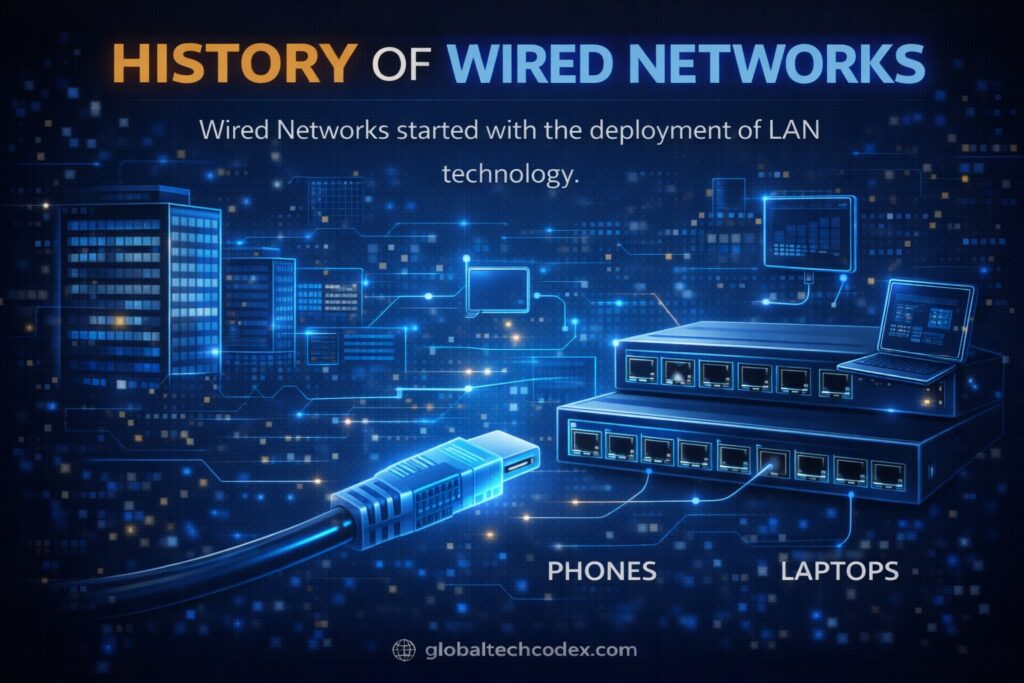
Wired Networks started with the deployment of LAN technology.
The simplest of networking had started as wired communication systems. Among the earliest significant inventions was the telegraph of the 19 th century which enabled messages to be sent over long distances via electrical signals over wires. In the future, the telephone enhanced communication as real-time voice conversations were made possible.
With the widespread use of computers in the middle of the 20 th century, computer networks emerged as a necessity to connect these computers. Old networks employed the usage of the physical cable in connecting the computers in order to exchange data and resources. These wired networks were the basis of the modern networking.
The development of Ethernet technology in the 1970s was one of the most significant ones. Ethernet enabled the use of cables to connect with the computers within the networks of local areas (LANs). Offices and schools were now able to connect numerous computers to printers, servers and shared storage equipment. Wired networks were stereotyped to be stable, fast, and reliable, which were fundamental in any business and institutions.
The Rise of the Internet
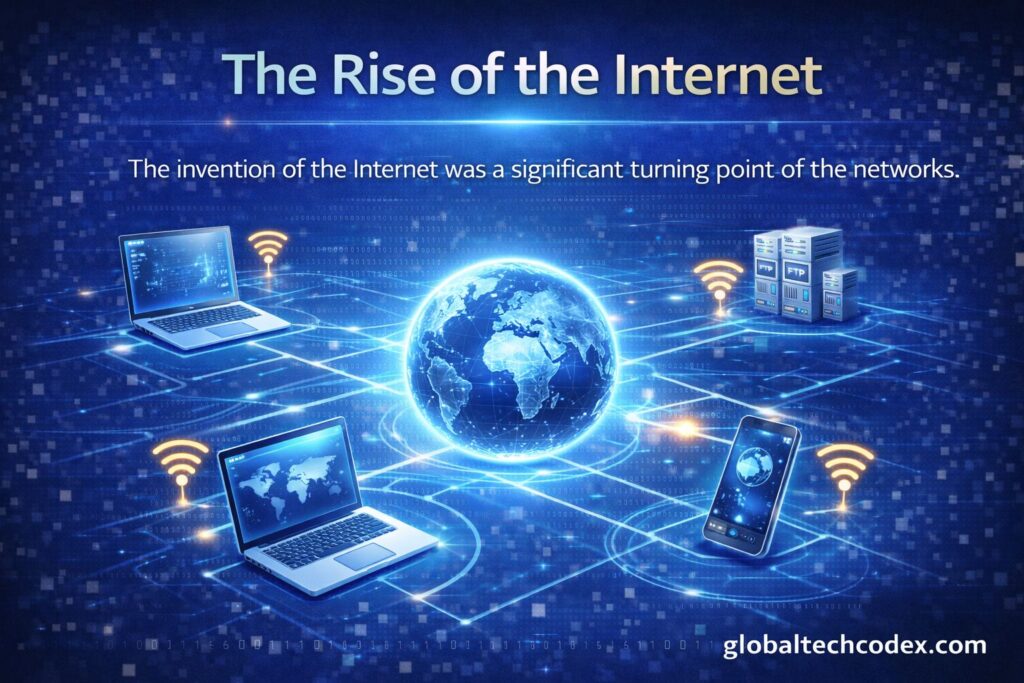
The invention of the Internet was a significant turning point of the networks history. Initial research networks linked universities and research establishments together enabling them to exchange information. These networks eventually grew and joined the present-day global Internet.
The Internet also enabled the world to connect the computers with each other through standard protocols. E-mail, web sites, and file sharing were set free. Companies started to make use of networks to communicate with their customers all over the world and individuals became able to access an enormous amount of information.
The wired Internet connections like the fiber optic cable and the broadband lines facilitated more efficient and dependable Internet connectivity. Fiber optic technology employs the use of light signals to pass data with extremely high speed thus enabling video streaming, cloud computing and on-line gaming.
Although it has its benefits, wired networks have shortcomings. The process of cable installation can be costly and time-consuming, and the devices have to be physically attached to the network.
Another feature of wireless networks to consider is their emergence.
The wireless networking transformed how individuals were connected to the Internet. Wireless networks do not use physical cables and instead they utilize radio waves in transmitting data between a device.
Wi-Fi is one of the most commonly used wireless technologies. Wi-Fi enables connecting smartphones, laptops, tablets, and smart devices to the Internet using cables. Wireless connectivity is also present at homes, offices, cafes, and public areas and has made individuals able to stay connected at any given place.
The wireless networks are flexible and convenient. Users are able to move about and still be connected and addition of new devices can be easily made without laying of further cables.
Mobile networks are also significant in wireless communication. The smartphones have the ability to connect to the Internet nearly everywhere thanks to cellular technologies like 3G, 4G, and 5G.
Wireless networking has increased the reach of the Internet particularly in the rural and remote regions where it is challenging to install the wired infrastructure.
Wired vs Wireless Networks
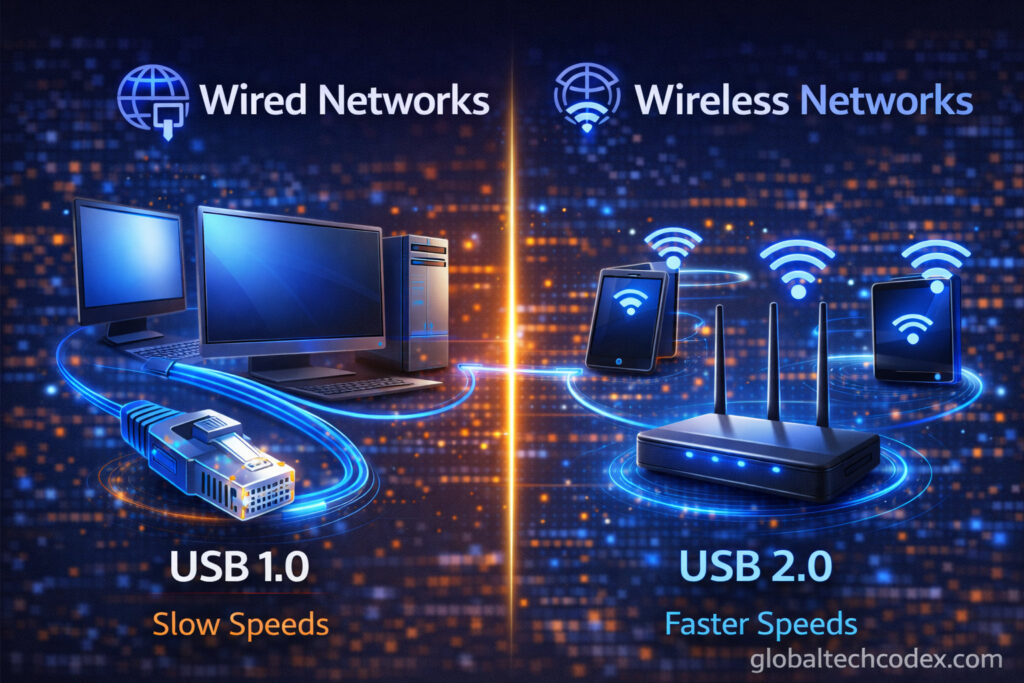
There are strengths and weaknesses of both the wired and wireless network.
Wired networks are usually more stable and faster. They offer reliable performance and are not so bothered with interference. Wired connections are usually favored when high speed and reliability are needed in the task involved e.g. data centers, game systems, and business networks.
Wireless networks, in their turn, are mobile and convenient. They enable the user to interconnect various devices and the Internet is available to the user almost everywhere, provided he or she is within the range. Wireless technology fits perfectly in the homes, mobile devices, and in the open community.
A large number of current networks combine both wired and wireless networks. To illustrate, a home network can be a wired network with the Internet provider connecting the router to the Internet and the devices being connected using wireless Wi-Fi.
Current Networking Technologies.
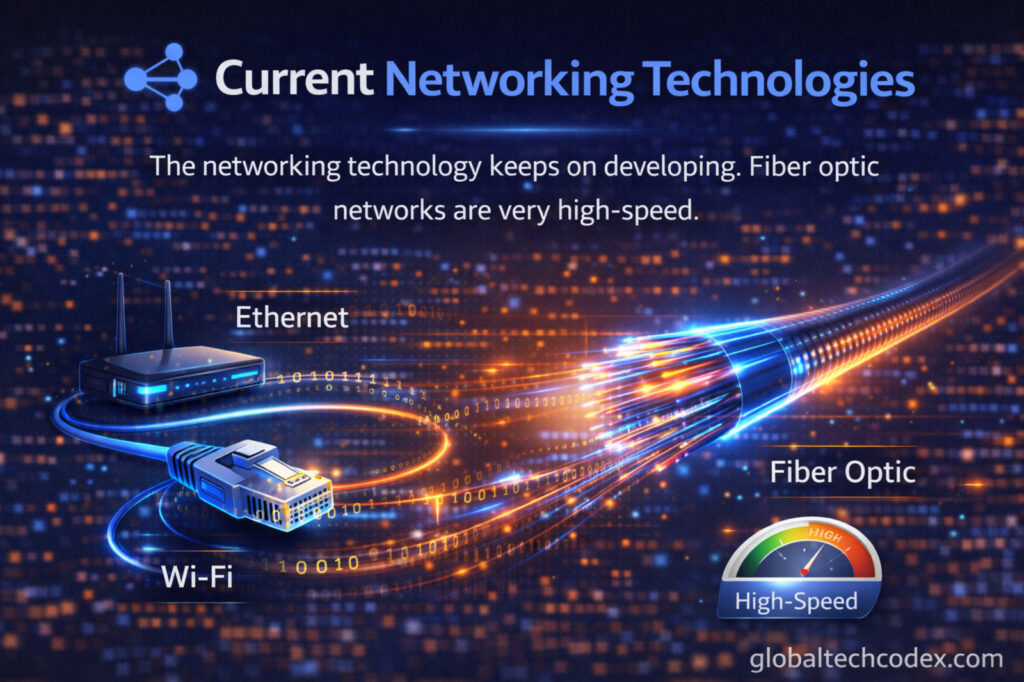
The networking technology keeps on developing. Fiber optic networks are very high-speed networks and are capable of meeting increasing data requirements. Cloud computing is essential to businesses because it is dependent on good networks to store and manipulate data remotely.
Another significant development is The Internet of Things (IoT). Wearable technology, smart devices, e.g. thermostats, security cameras, are connected to networks, exchanging data and automating operations. The connected devices are turning homes and cities smarter.
The 5G wireless technology is also altering the networks in the way that it is offering faster speeds with reduced latency. This will facilitate the use of new applications including autonomous vehicles, remote surgery, and virtual reality.
Internet connectivity to remote locations that can be served by traditional systems is being increased by the use of satellite Internet. The new satellite systems will seek to offer international Internet connectivity.
Security issues Network.
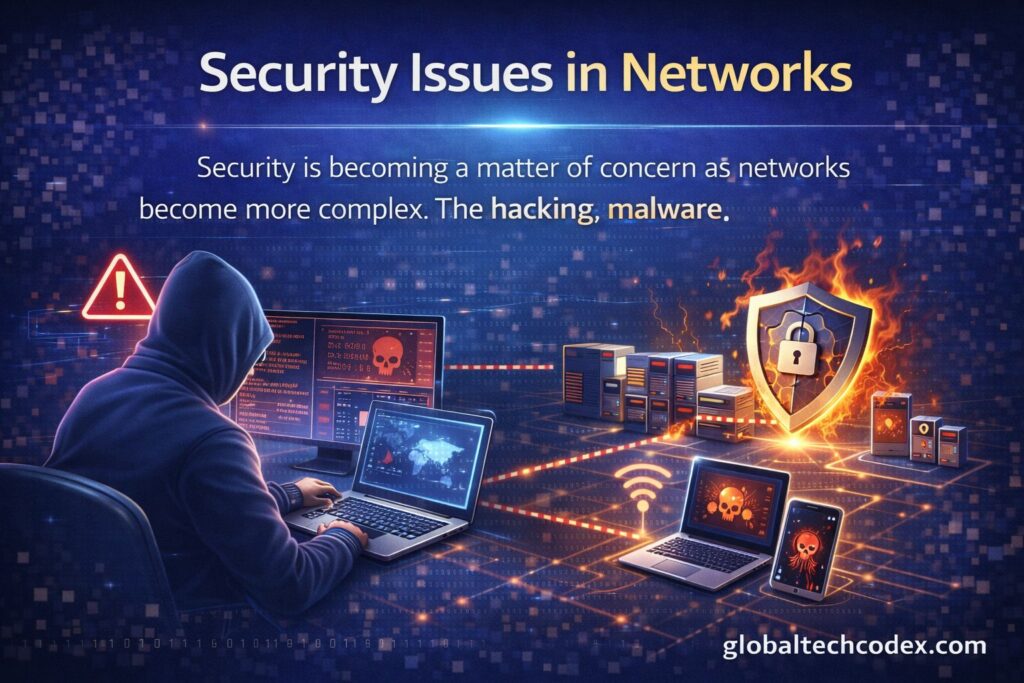
Security is becoming a matter of concern as networks become more complex. The hacking, malware, and data breaches are the examples of cyber threats that can impact both individuals and organizations.
Network security entails the use of firewalls and encryption as well as secure means of identification. A high level of security in both wired and wireless networks is necessary to ensure safety of data.
The passwords and encryption with a network that is wireless should be ensured so that it cannot be accessed by unauthorized users. Firms tend to deploy advanced security systems to establish protection of valuable information.
The other crucial contribution of the users to the network security is software upkeep that is kept abreast with the current time and avoiding of suspicious sites or downloads.
The Future of Networks
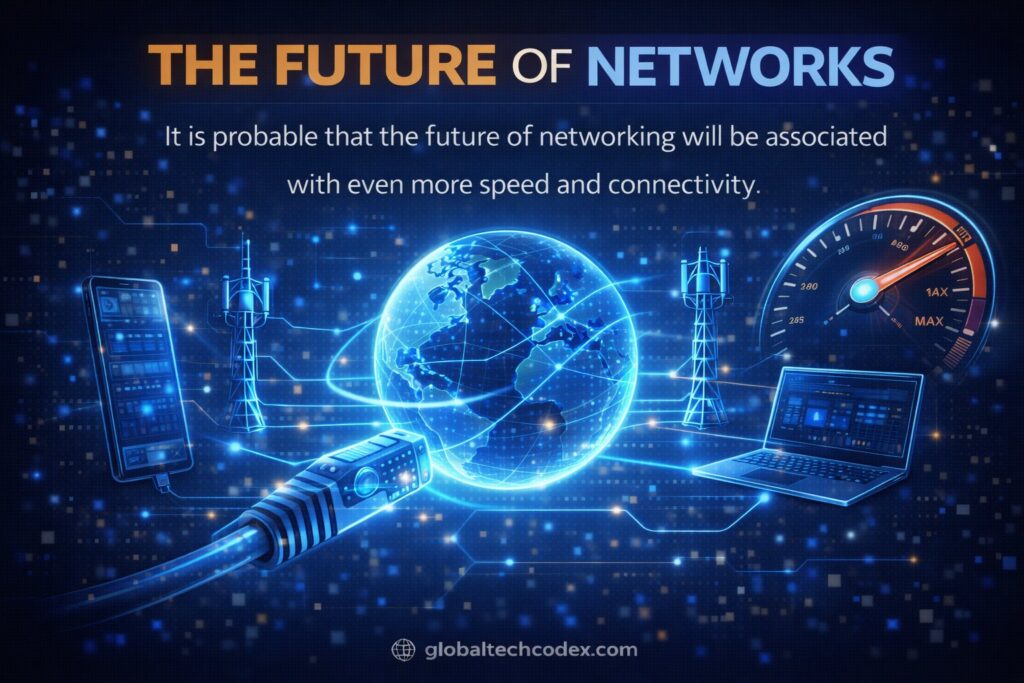
It is probable that the future of networking will be associated with even more speed and connectivity. The networks will be enhanced by technologies like artificial intelligence and edge computing that will make networks smarter and efficient.
There will be further advancement in wireless networks that would offer more reliable and fast connections. Meanwhile, wired infrastructure like fiber optics will be necessary to continue to support the data traffic in the globe.
The new innovations can link billions of devices, which can make smart homes, smart transportation systems, and sophisticated healthcare solutions.
Future networks are aimed at establishing continuous connectivity in which devices network in real time and in a dependable manner.
Conclusion
The history of networks is the history of development and advancement. Since the early wired communication systems to the current wireless communication technologies networks have redefined the manner in which people interact with information as well as with one another.
Wireless networks are flexible and convenient whereas wired networks are fast and dependable. They are the pillars that make communication modern.
With the ever-growing technology networks will be even stronger and crucial. The world is becoming more interactive than ever and the networks will keep defining the future of communication and technology.