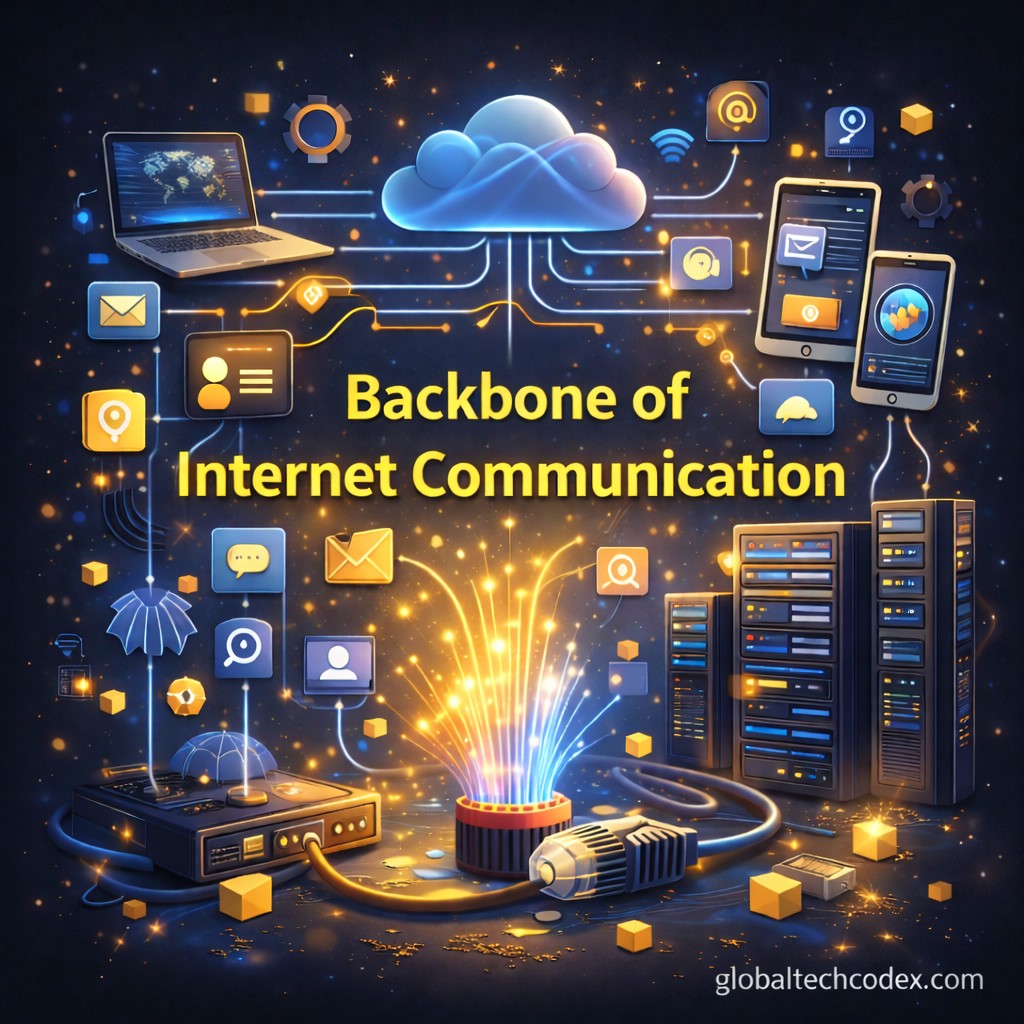

It has happened to be one of the most important technologies of the modern day society the internet. It connects people, institutions, states and gadgets all across the globe to make communication and access to information instant. The internet has gained great significance in the day-to-day life of people in terms of emailing, viewing videos online, undertaking virtual classes or even conducting online banking among others. Internet communication is supported by the heavy infrastructure that supports this giant network in the world. The primary architecture that linked all the networks and facilitated the transfer of information across the entire world was internet backbone.
The backbone has the role of making massive data to be shipped over long distances using high performance communication systems. It consists of fiber-optic cables, routers, data centres, internet service providers and exchange points. All these components work together to offer quick, trustworthy and safe exchange of information among different components of the internet.
Entering the Internet Backbone.
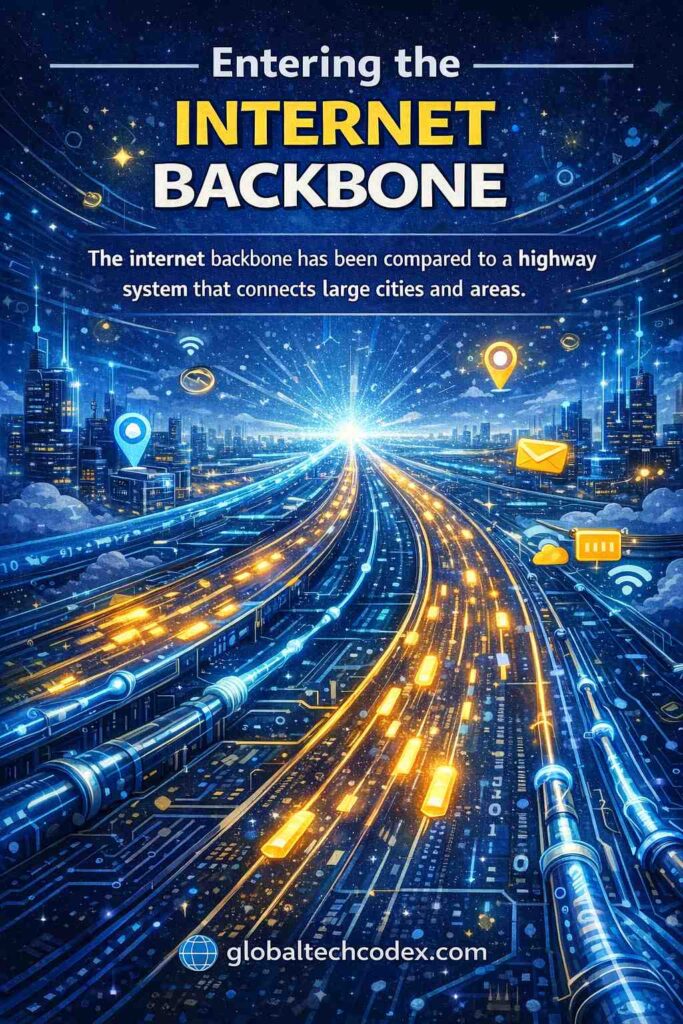
The internet backbone has been compared to a highway system that connects large cities and areas. The internet backbone is similar to the highways in that it facilitates the movement of vehicles across networks among countries and continents. It connects extensive networks operated by internet services providers, higher educational institutions, companies and governments.
The backbone infrastructure is also designed to carry traffic of very high magnitude. Internet is used by millions of people simultaneously thereby generating huge information every second. This is where the backbone comes in to ensure that this information is able to move successfully without causing delays and interruptions.
Role of Fiber-Optic Cables
One of the greatest technologies that are applied in the internet backbone is the fiber-optic communication. The fiber-optic cables transfer the long distance and high speed data. Unlike the traditional copper wires that facilitate electrical signatures, the fiber-optic cables facilitate the information through the light pulses.
These are cables of fine glass or plastics through which light signals are passed by. Light travels so rapidly and its interference is negligible such that fiber-optic can be employed in long-range communication of vast amount of information at minimal signal loss. This makes them effective in supporting the internet communication in the world.
The internet backbone is physically supported by fiber-optic cables. They are connecting big cities, nations and even continents and enable high speed transfer of data across the earth.
Under-sea Communication Cables.
Most of the internet traffic around the globe is carried by submarine fiber-optic cables that are stranded in the ocean floor and this agreement is made. Those are submarine cords that connect the continents and promote communications across the world. Submarine cables would ensure that internet connectivity is very small.
Thousands of kilometers of submarine cables cover the ocean connecting countries and regions. Such cables carry huge information, including emails, video calls, financial transactions and streaming videos. In the event any person is talking to another person in another nation over the internet, in majority of instances, it is quite probable that the data will be transmitted via these undersea cable networks.
The submarine cable networks are properly maintained and highly planned so as to ensure good connectivity. Special ships are necessary to put in place and repair these cables.
Routers and the transmission of Data Packet.
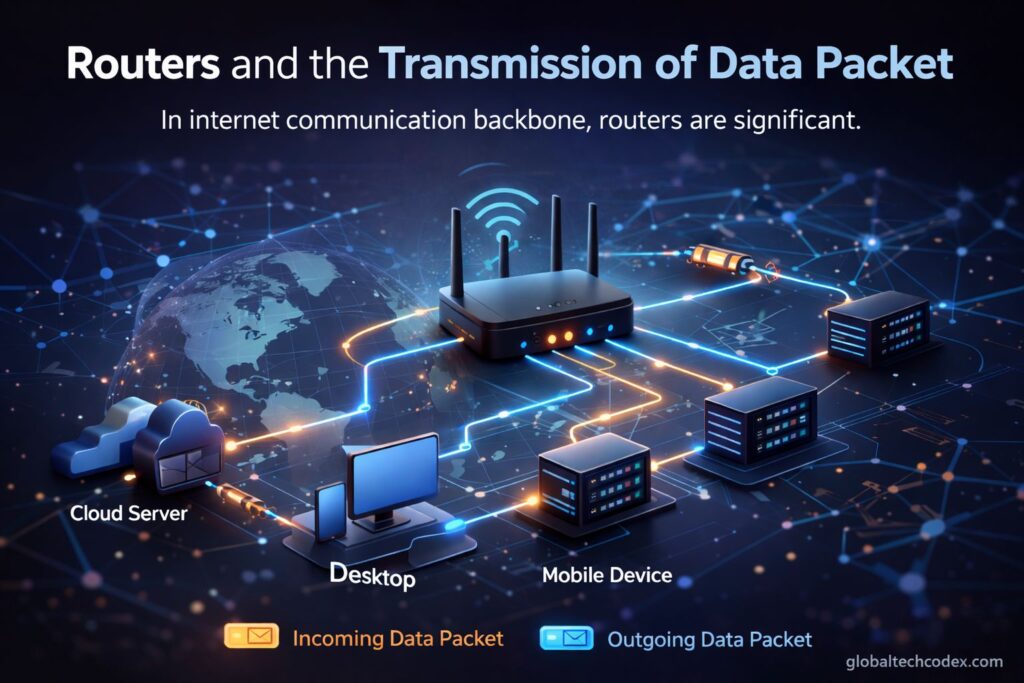
In internet communication backbone, routers are significant. A router is a network device that is applied in the process of routing data between networks. In case the data is conveyed through internet, it is cut into small pieces referred to as data packets.
Each packet of data contains a portion of the initial information along with specifications of its destination. Routers analyze these packets and make a decision as to which route these packets should take throughout the network. They then forward the packets to the other router of the route till the destination.
The routers utilized as backbones are highly advanced and have the ability to support huge data traffic. They are extremely quick in addition to being expected to render an efficient data routing to the globe network.
ISPs
: Internet Service Providers.
Internet Service Providers also called the ISPs are the institutions which provide internet services to the users. They are the liaisons between individuals or organizations and the world wide web.
ISPs are networks that connect the homes, businesses and institutions to the internet backbone. However, the ISPs differ in their degree, based on the capability of the network and the coverage of the networks worldwide. Tier-1 providers are considered to be the largest providers. These companies operate massive systems of the globe and are the major sponsors of the internet.
Tier-1 providers peer directly among themselves in what is termed as peering. Peering provides networks to share data traffic devoid of third parties. Such massive backbone providers are associated with smaller ISPs with the intention of supplying internet services to its users.
Internet Exchange point (IXPs)
Another important internet backbone is the Internet Exchange point (IXP). The IXP is the physical location where the networks are joined and share the internet traffic. These exchange points allow exchange of data without necessarily passing through the different intermediate networks.
IXPs enable point to point communication between networks hence enhancing internet speed, lessening latency and operation costs. They also make the routing of internet traffic more efficient.
Most of the major cities in the world have a high number of IXPs where hundreds of networks have been connected. The thing is that these facilities work with huge volumes of data every second and play a significant role in the proper functioning of the internet communication.
Importance of Data Centers
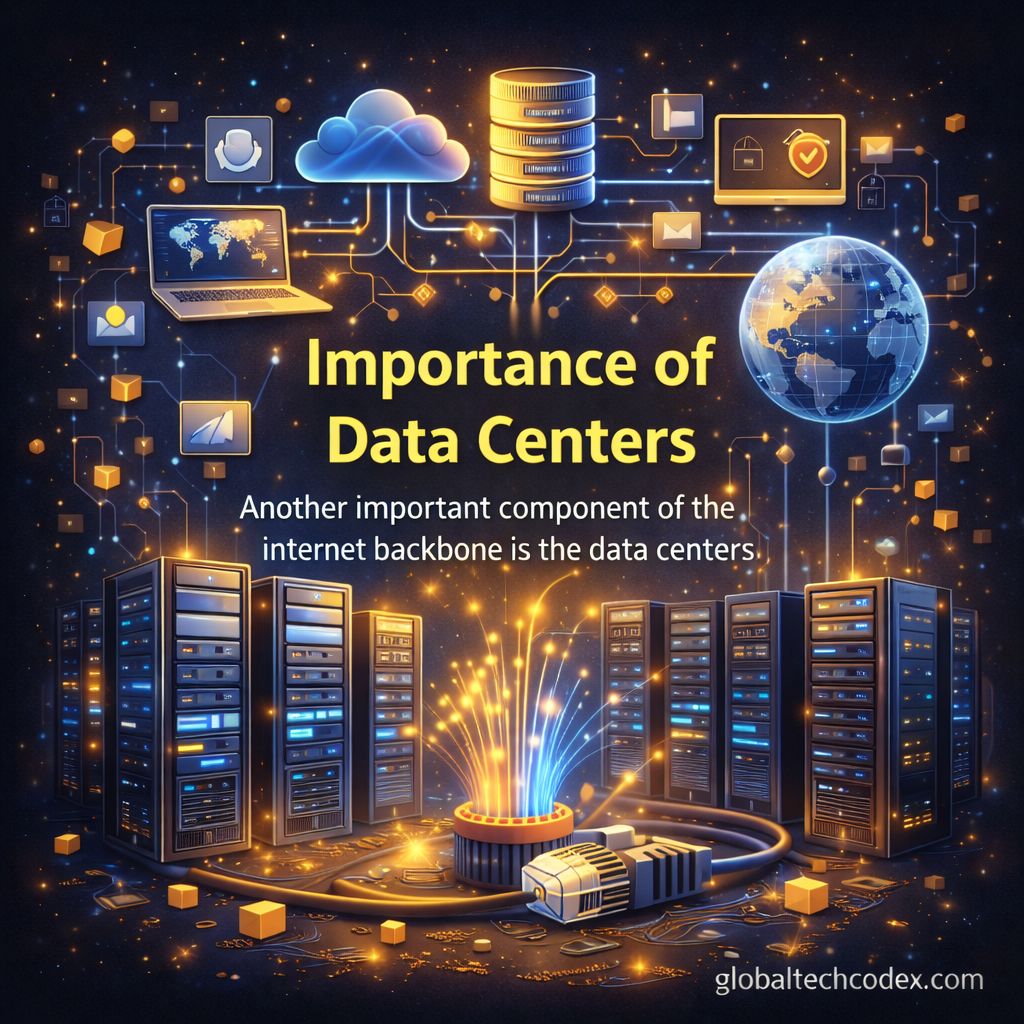
Another important component of the internet backbone is the data centers. A data center is a building that accommodates servers, storage facilities, networking systems, and other computer facilities. These systems store and process enormous information that serve websites, applications and online services.
A good number of the widely used internet services are based on enormous data centers to provide services and content to users. When an individual accesses a web or is watching a video over the internet, the request is handled by servers on a data center. The message is channeled through internet backbone until the device of the user is reached.
Data centers are well distributed in various regions of the globe to have accessibility fast and to be more reliable. They are built with superior cooling and power provision as well as security to ensure constant running.
Network Protocols and Data Transmission.
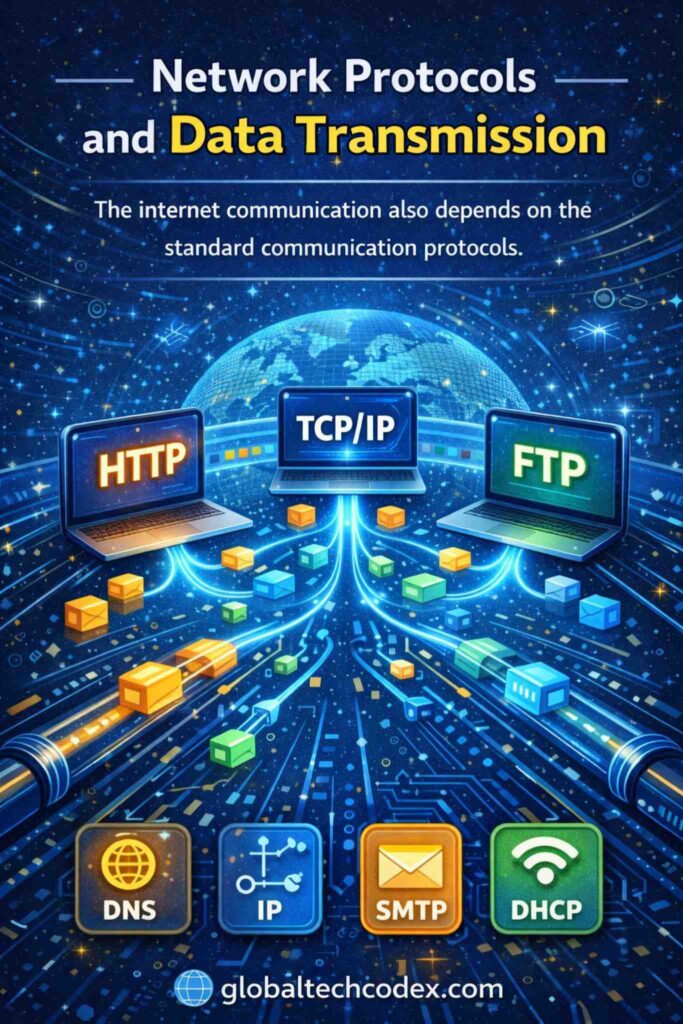
The internet communication also depends on the standard communication protocols. Among the most significant protocols, there is Transmission Control Protocol/Internet Protocol (TCP/IP). This protocol gives the fundamental guidelines by which the data is sent through networks.
TCP/IP ascertains that data packets are addressed, sent and reassembled appropriately upon arrival at their destination. TCP/IP also makes sure that information is accurately transmitted over the network even when the packets may be going through different routes.
These standards enable various kinds of devices and networks to interact with one another easily thus creating a cohesive internet system globally.
Backbone Reliability and Backbone Security.
Since the internet has been relied upon to offer life-blood services like banking, healthcare, education, and government services, security and reliability is highly valued. Networks Backbone networks have redundancy and backup mechanisms to guarantee that they keep running.
There may be several ways through which data can be transmitted. In case one of the connections fails because of technical problems or damage, the data is automatically routed over different routes. This can be used to avoid network outages and it makes sure that the communication does not break down.
The network operators also have security measures to prevent the attack on the backbone by cyber threats, unauthorized access, and data breaches.
Internet Infrastructure Future Developments.
The need to have a high speed and secure internet connection is ever rising with the advancement in technology. The future of internet communication is 5G networks, cloud computing, and satellite internet system, new technologies that are being used to shape the future.
The aim of these technologies is to enhance the speed and minimize the delays of a network as well as extending internet connectivity to isolated and underserved areas. With the digital services on the rise, the internet backbone will keep on increasing and enhancing to keep pace with the increased demands of the global communication.
Conclusion
The foundation of the internet communication is the main infrastructure that makes the entire internet to be operational. It is made up of fast fiber optic cables, fast routers, internet service providers, exchange points, and data centers that are in coordination to relay information globally.
This intersectional framework enables billions of gadgets to interact among themselves after each second, which enables contemporary endeavors like remote education, online enterprise, amusements, and international correspondence. With the ever-evolving technology, the internet backbone will be a very important element in the digital world and people will be able to be in contact anywhere throughout and communicate information in real time.